

Electric Pedal Scooters
A two-wheeled car with pedals, typically limited to speeds of 30 mph or less. License, insurance, and registration are required (can differ based on the state).
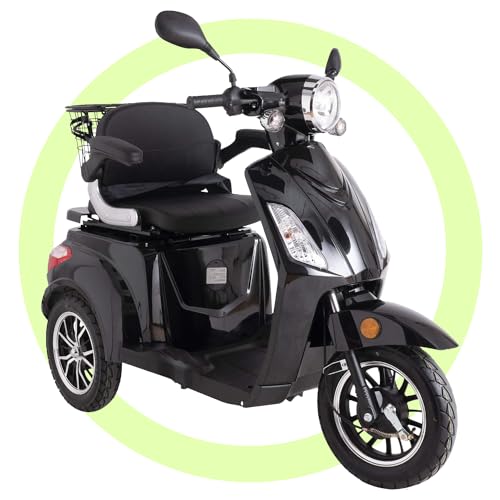
E-scooters are a fun and eco-friendly method of travel. They also decrease our dependence on fossil fuels. They're also an excellent option for those who need some assistance to move, like people with leg or heart muscles issues.
1. Pedal Assist
Pedal-assist systems let riders cruise around without the need for constant physical effort. A simple press of the throttle controls the motor to provide a personalised level of support, ranging from minimal to full power. The system is activated through a sensor attached to the cranks on the bike that detects the rate of pedal rotations (known as cadence) and transmits an alert to the motor controller. The sensor adjusts the electric motor's output based on this information to maintain the rider in a comfortable position. The rider has the option of selecting the desired level of pedal assistance. A lower level could help with difficult terrain while a higher one is able to allow for a more vigorous exercise, but it's important not to let the assisted power level exceed the rider's own physical limitations.
Depending on the type of electric scooter, there are a variety of levels of assistance. Cadence sensors are the most common type and work by using a magnet installed adjacent to the pedals to detect movement. When the magnet detects a movement, it activates the motor and disperses power to the cranks according to the pedaling speed. The system is usually simple and smooth, however some models also use torque sensors to offer an even more natural experience.
There are also a few types of e-bikes that operate using a throttle, not a cadence or torque sensor. These systems are generally more expensive, and the user must press a button on the handlebars to start the motor. This is a great option for those with mobility issues who require access motor power without the need for actual pedaling.
Understanding these technical specs is essential to make an informed decision when choosing an electric scooter. You can assess performance by knowing the specs of an electric scooter, which include its power (wattage and voltage), battery capacity range, speed and suspension systems, brakes, carrying mechanisms, and brakes (drum disc, disc, the regenerative). It's not just a matter of being literate, but understanding the terms will help you make the best choice for your lifestyle and requirements.
2. Torque Sensor
Torque sensors are utilized in a few electric bikes to measure how much force is being exerted on the pedals by the rider. The data is transmitted to the motor controller, which then adjusts power output to the exact. The motor is able to offer more assistance to the rider as they exert more effort. The motor also has the ability to reduce its power output if the rider is not putting into a lot of effort, for example as when riding on flat ground or while stationary.
Torque sensors function by adding strain gauges or similar technologies into the lower bracket in which the cranks and pedals are attached to the frame. The sensor monitors the speed of the cranks and sends the information to the motor controller which calculates the force is being applied to the pedals. This is a more accurate method of determining how hard the rider is pedaling, which lets the motor provide the best level of support.
A torque sensor can also detect subtle changes in amount of power applied to the pedals when compared to the cadence. This creates the rider a more natural feel and makes the motor appear as if it is an extension of the rider rather than just providing power based on the level of assistance you select.
A cadence sensor on the other is based on magnets to determine whether the crank arm is moving. If so it will turn on the motor to supply energy. This can lead to a quicker acceleration, but it does not provide the natural and smooth feel that many riders want.
Another drawback of a cadence sensor is that it only works when the bike is in motion which could be a problem on rough terrain where the pedals could move with minimal or no force due to loose dirt or uneven ground. This also means that the rider needs to wait for the motor to start working before they can start accelerating which can be difficult when starting from a standstill or when riding downhill.
3. Lean-To-Steer
Learn how to steer your child's scooter, whether they're looking to speed up the journey to school or just scoot around the neighborhood. Many kick scooters are two-wheeled models which require you to turn the handlebars in a similar way as turning a bicycle, or three-wheeled models that are more stable and suitable for preschoolers and elementary-school kids.
These are referred to as "lean-to-steer" scooters and work by having children shift their weight in a specific direction to propel the wheels in that direction, much as skateboards. It might seem odd to adults, however children quickly get used to the concept. It is also more comfortable for young children, as they don't have to use their hands to steer.
Lean-to steer is also more stable on uneven surfaces, and allows for smooth, easy turns. It is therefore the perfect scooter for children who wish to ride on sidewalks or on roads.
lightweight mobility scooter travel electric scooter for seniors explained that scooters improve gross motor development as they strengthen the supporting leg and hip. This improves balance and coordination. The propelling leg builds strength by using the quadriceps, hamstrings and calf muscles. Drobnjak said that the skills children learn while scooting can be transferred to other sports, like skating, surfing, or skiing.
A good scooter will feature a height-adjustable steering wheel and a wide range of weight limits, meaning it will grow with your child as they grow. It should be durable and made from nonbreakable materials that can withstand tough wear and tear, and last for years.
The Micro Maxi scooter is a good example of such equipment. It has a three-wheeled design and lean to steer technology. The wheels are designed to roll over bumps and cracks effortlessly, which provides more stability for young children while riding their scooters. The lean-to-steer system allows kids to make adjustments on the fly by simply shifting their body weight in a particular direction. This lets them ride more intuitively, faster and safer than traditional scooters.
4. Large Storage
The Large Storage is a utility item that provides additional Tier-2 attachment slots to the Astroneer's base of players. It can hold up to 24 small objects and can be placed vertically or horizontally. It can also be placed so that two of its slots are angled downwards, thereby making it suitable for Floodlight. All inventory of multiple mounted Large Storage Modules will also be unified and interoperable as one module. It will also provide power to an RTG or any other powered platform it is mounted to for as long as it is active. Find out how it operates in the video below!